(+34) 93 414 55 66
 Contact
 Espacio socios y amigos

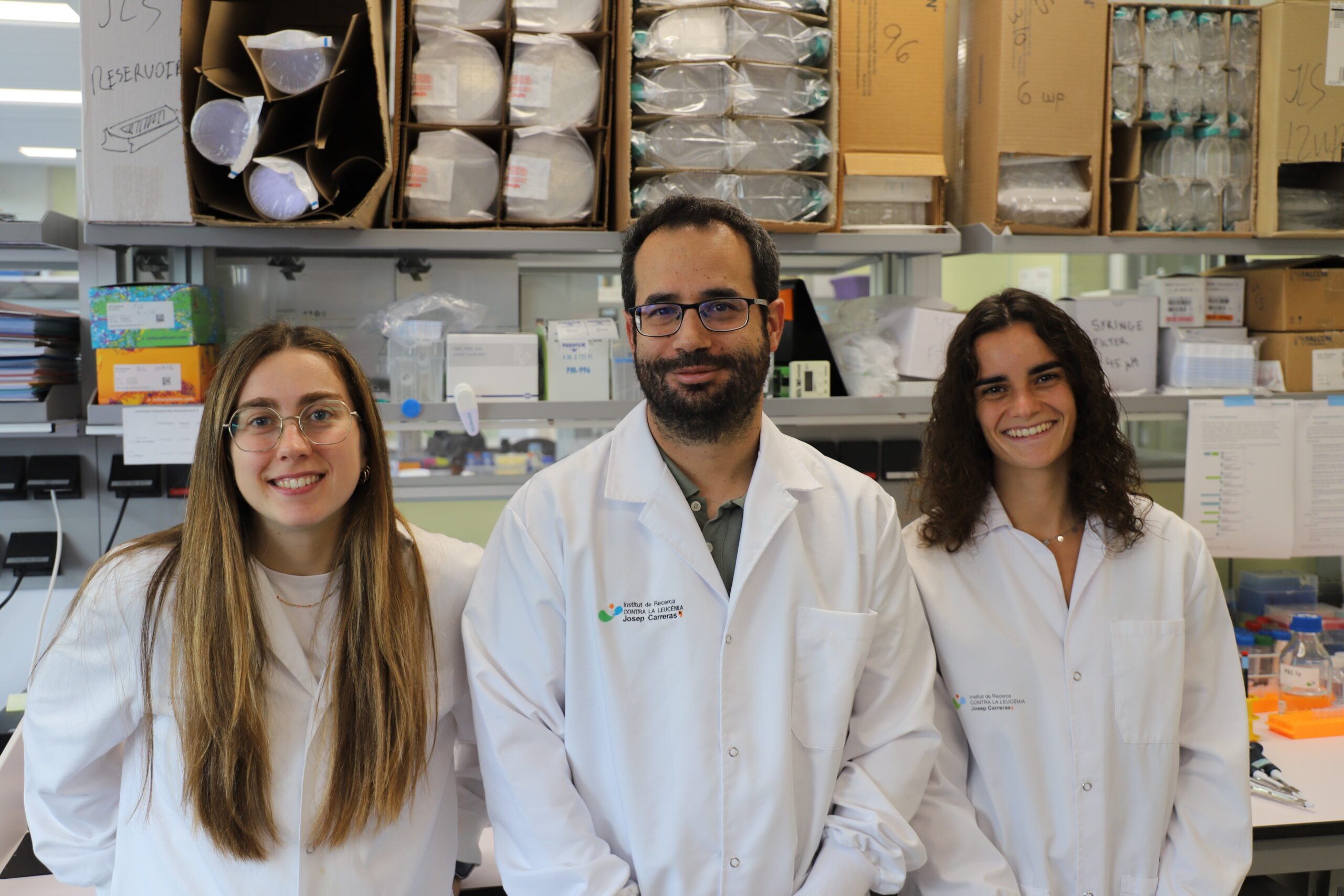

A team of researchers at the Josep Carreras Leukaemia Research Institute, led by Dr José Luis Sardina, has discovered a new connection between the mechanisms that regulate gene activity and the development of acute myeloid leukaemia (AML), one of the most aggressive forms of blood cancer.
The study, published in the prestigious scientific journal Science Advances, has identified the role of AGO2, a protein involved in RNA regulation, which could become a new research target for the development of future treatments for this disease.
The research, whose first author is Dr Aleksey Lazarenkov, has provided a better understanding of how the TET2 protein, which is involved in the epigenetic regulation of DNA, controls the activity of the AGO2 gene during blood cell development. This finding establishes a previously little-understood connection between two mechanisms that are essential for cell function.
One of the most significant results was obtained by reducing AGO2 levels in leukaemic cells from patients with AML. In experiments carried out in mice, the researchers found that these cells had a much lower capacity to initiate and sustain the disease.
Furthermore, an analysis of patient data revealed that certain changes associated with AGO2 could be linked to the progression and prognosis of leukaemia, although further studies will be needed to confirm their potential clinical usefulness.
These findings open up new opportunities to investigate how acute myeloid leukaemia develops and persists and to explore future therapeutic strategies. However, further research is still needed to determine whether targeting this protein could be safe and effective in patients.
This breakthrough highlights the importance of continuing to support basic and translational research to better understand the mechanisms underlying leukaemia and move towards more precise and effective treatments.