(+34) 93 414 55 66
 Contact
 Espacio socios y amigos

Information endorsed by… 
How does bone marrow work and what are the types of blood cells?
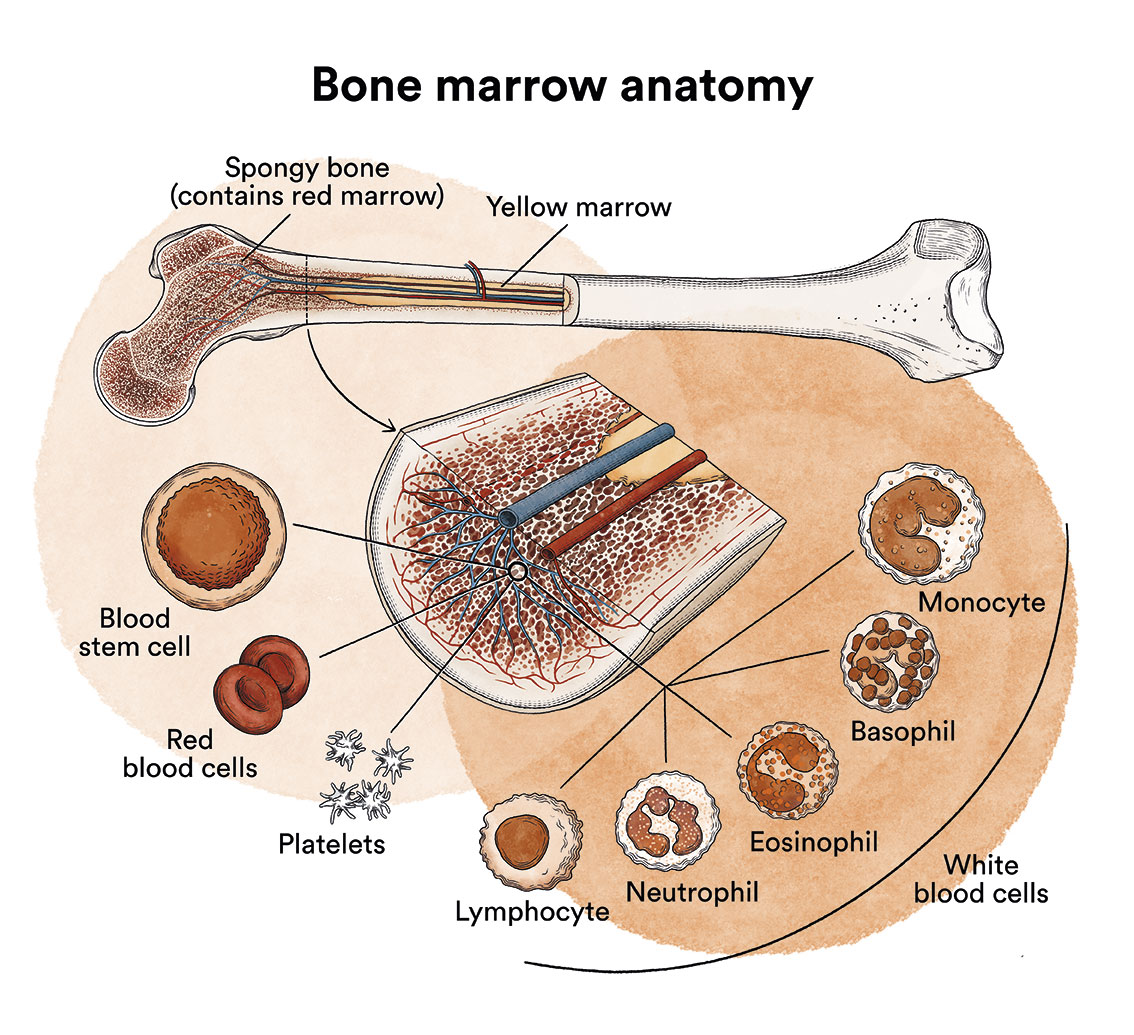
Polycythaemia vera is a type of blood cell cancer that originates in the bone marrow. See section Leukaemia, bone marrow and blood cells.
What is polycythaemia vera and who does it affect?
Polycythemia is a disease classified within the group of chronic myeloproliferative syndromes or neoplasms, along with primary myelofibrosis and essential thrombocythemia, among others. The term chronic myeloproliferative syndromes was described in 1951 when it was observed that these diseases shared certain characteristics, such as the overproduction of blood cells, an increased frequency of thrombosis and hemorrhage, and the possibility of progression from one to another.
In the case of polycythemia vera, there is an uncontrolled increase in the production of red blood cells and frequently also of white blood cells and platelets. Patients with polycythemia vera have an increased blood volume due to this increase in red blood cells, and their blood is thicker, which promotes thrombosis.
In our country, the incidence of polycythemia vera is 4-6 cases per million inhabitants per year, with the median age at diagnosis being 60 years. This disease is rare before the age of 40.
We recommend reading the educational materials available in the Patient Area of the website of the Spanish Group for Philadelphia-Negative Chronic Myeloproliferative Diseases (GEMFIN).
What are the causes of polycythaemia vera?
The causes of polycythemia vera and other chronic myeloproliferative disorders were unknown until recently. Since 2005, mutations in the JAK2, CALR, and MPL genes have been identified as the cause of these diseases. These mutations occur spontaneously, by chance, during the duplication of genetic material that takes place in the division of blood-producing stem cells. These stem cells multiply constantly throughout life to produce red blood cells, white blood cells, and platelets. In this cell division process, each stem cell gives rise to two daughter cells. For this to occur, the DNA, or genetic material that encodes all the information necessary for cellular life, must be copied accurately. It would be like making a handwritten copy of a 46-volume encyclopedia (chromosomes) where each volume contains hundreds or thousands of chapters (genes). Each gene, in turn, is composed of hundreds or thousands of nucleotides (equivalent to the letters in the encyclopedia text). In polycythemia vera, a mutation occurs in the JAK2 gene, located on chromosome 9. The most frequent mutation is called V617F and would result from changing a single letter in that encyclopedia, in the chapter corresponding to the JAK2 gene on volume 9 (chromosome 9). As a consequence of the JAK2 gene mutation, stem cells bypass the physiological mechanisms that regulate red blood cell production, leading to an overproduction of red blood cells and a consequent increase in blood volume.
Currently, polycythemia vera and other myeloproliferative syndromes are considered hematological neoplasms because, as a consequence of the aforementioned mutations, a cell clone originates that possesses a greater proliferative capacity than normal, non-mutated stem cells. However, it is important to note that the proliferative advantage of the mutated cells in polycythemia vera is low compared to other hematological diseases such as leukemia, myeloma, or lymphoma.
What are the symptoms of polycythaemia vera?
In some cases, the disease is asymptomatic and is therefore diagnosed incidentally during routine blood work. Other patients, however, experience symptoms related to the disease, the most characteristic of which are:
- Generalized itching after contact with water
- Burning pain in the lower extremities
- Gout attacks (intense pain in the big toe as a result of persistently elevated uric acid levels)
- Headaches, tingling in the hands and feet, and visual disturbances
- Bleeding: This can occur in any location and is more frequent in patients with high platelet counts and/or those taking antiplatelet drugs such as aspirin or anticoagulants.
The most frequent complication of polycythemia vera is thrombosis, which is the occlusion of a blood vessel by a clot. Thrombosis can affect both arteries and veins. The symptoms caused by thrombosis depend on the blood vessel that is obstructed. In the absence of specific treatment, thrombosis can have serious consequences, making early detection crucial for initiating treatment that allows for revascularization of the occluded vessel. The following are the common symptoms of the most frequent thromboses:
- Stroke (occlusion of arteries in the brain): sudden onset of inability to speak or move a part of the body, loss of vision.
- Acute myocardial infarction (occlusion of the coronary arteries that supply blood to the heart muscle): oppressive pain in the center of the chest, which may be accompanied by dizziness.
- Deep vein thrombosis (occlusion of a vein in the legs): swelling and pain in one of the legs (which may be below the knee or extend from the groin).
- Pulmonary embolism (occlusion of the pulmonary arteries): sudden onset of shortness of breath or difficulty breathing. In addition, patients with polycythemia vera may have thrombosis in anatomical territories that rarely affect the general population, such as the veins that carry blood to the liver or the veins that collect blood from the brain (cerebral venous sinuses).
How is polycythaemia vera diagnosed?
To diagnose polycythemia vera, an elevated red blood cell count and a JAK2 gene mutation must be demonstrated. The elevated red blood cell count is defined by a blood test (CBC), which typically shows a marked increase in red blood cell, hemoglobin, and hematocrit levels. Some patients may also present with elevated white blood cell and platelet counts. The JAK2 gene mutation is also tested for in the blood test, but requires a special request as it is a PCR (polymerase chain reaction) genetic test. When hemoglobin/hematocrit levels exceed a certain threshold and the presence of the JAK2 gene mutation has been confirmed, a diagnosis of polycythemia vera can be established.
However, the hematologist may order the following additional studies:
- Further molecular testing, generally using a next-generation sequencing (NGS) panel. This test can detect JAK2 gene mutations other than V617F, making it very useful in cases with a high suspicion of polycythemia vera where conventional JAK2 testing has been negative.
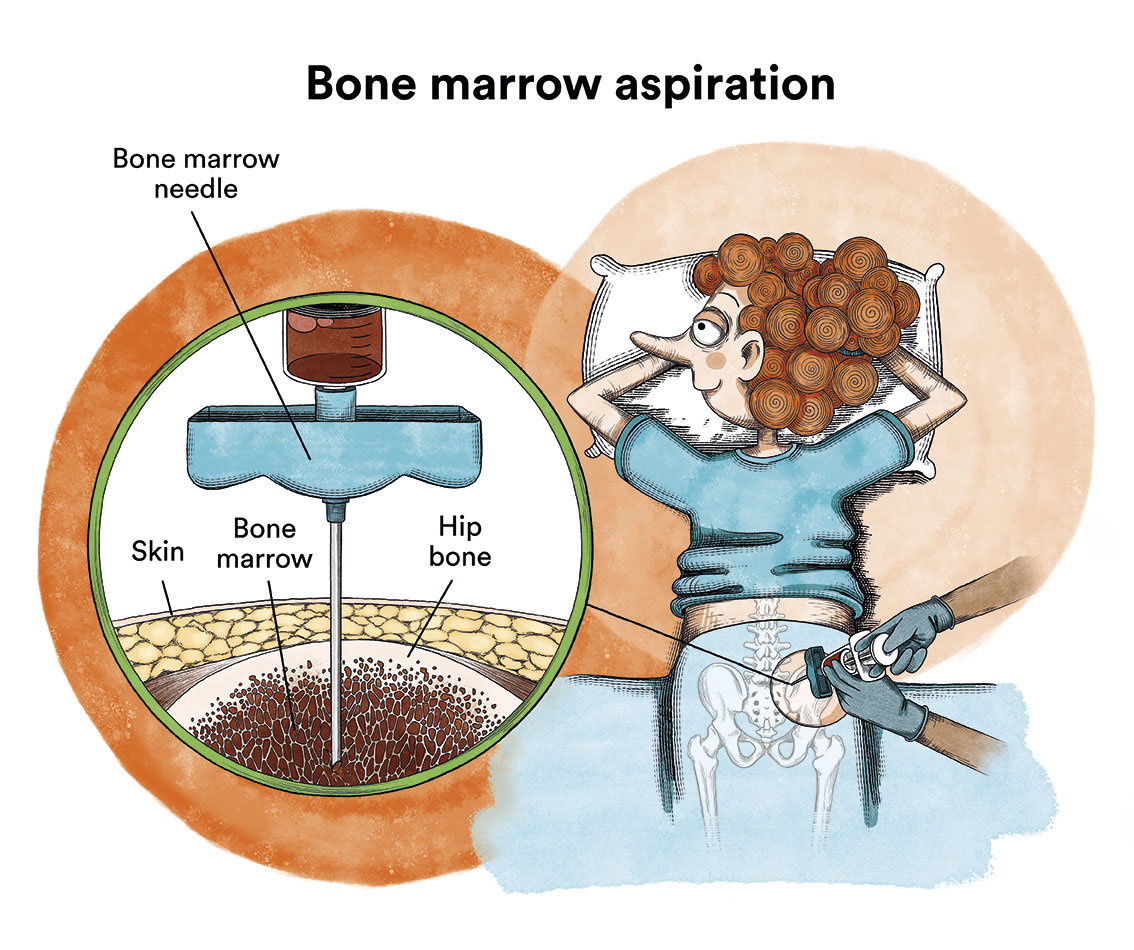
- Bone marrow biopsy: Distinguishing between polycythemia vera and other myeloproliferative disorders such as essential thrombocythemia or myelofibrosis can be difficult. In these cases, a bone marrow biopsy can help establish the diagnosis. It involves extracting a small fragment of bone from the hip (about the size of a noodle). Local anesthesia and/or sedation are administered.
- Determination of red blood cell volume or mass using isotopic methods: This is a classic test to demonstrate an increase in red blood cells. It involves taking a small amount of blood from the patient, labeling it with a radioactive isotope, and then returning it to the patient to calculate the patient’s red blood cell volume. It is a very useful test, especially in cases with slightly elevated hemoglobin/hematocrit values, but it is not usually available in most hospitals.
What is the treatment for polycythaemia vera?
The goals of polycythemia vera treatment are:
- To prevent thrombosis and hemorrhage.
- To control the symptoms of the disease.
To prevent arterial thrombosis, it is very important to achieve adequate control of cardiovascular risk factors. Although this control is usually the responsibility of the primary care physician, the hematologist typically provides some basic recommendations to reduce cardiovascular risk, including:
- Smoking cessation. Treatments to help people quit smoking are currently available in primary care.
- A healthy lifestyle that includes a Mediterranean-style diet and regular physical exercise adapted to the patient’s characteristics.
- In case of elevated glucose levels, the patient is referred to primary care for diagnosis and evaluation of treatment, which may include diet with or without medication. The goal is to maintain glycated hemoglobin (HbA1c) below 7%.
- High blood pressure (hypertension). Blood pressure measurement is recommended, and if it is elevated (systolic blood pressure > 140 mmHg, diastolic blood pressure > 90 mmHg), a visit to the primary care physician is advised. The goal is to maintain systolic blood pressure < 130 mmHg.
- Cholesterol levels (total, HDL, and LDL) should be measured. Depending on the patient’s characteristics (age, history of thrombosis, systolic blood pressure, renal function, and cholesterol levels), the need for pharmacological treatment to lower cholesterol levels is assessed. Not all patients with high cholesterol levels require medication.
In addition to these general measures, it is very important to keep the hematocrit below 45%, as the risk of thrombosis is significantly reduced when the patient remains below this value. Hematocrit can be controlled with phlebotomy (removal of 500 ml of blood) and/or with cytoreductive medication. Antiplatelet agents (low-dose aspirin 100 mg/day) are usually prescribed for all patients unless contraindicated (for example, patients with a very high platelet count, coagulation disorders that predispose them to bleeding, those already receiving anticoagulant therapy, or those who have experienced hemorrhagic complications).
The hematologist considers each patient’s characteristics, such as age, symptoms, previous illnesses, complete blood count values, etc., to decide on the most appropriate treatment.
In young patients who have not experienced thrombotic or hemorrhagic complications, have few symptoms, and whose disease manifests primarily as an increase in red blood cells, initial treatment typically consists of phlebotomies and aspirin. Some centers offer the option of erythropheresis instead of phlebotomy, a technique that allows for the removal of twice as many red blood cells per procedure as phlebotomy, thus reducing the number of times the patient has to visit the hospital.
In other cases, the hematologist considers it better to initiate cytoreductive treatment to control the disease. Multiple factors influence this decision, such as age, the symptoms produced by the disease, blood count abnormalities, history of thrombosis and hemorrhage, or the number of phlebotomy sessions the patient requires to control the hematocrit. The treatment of choice in most patients is hydroxyurea, although pegylated interferon is also frequently used in young patients. The choice between these two modalities depends on multiple factors, so the treatment decision is usually made in consultation with the patient. In patients in whom hydroxyurea does not adequately control the disease or whom the patient does not tolerate, treatment with ruxolitnib is indicated. Some patients are treated with oral anticoagulants, especially if they have experienced venous thrombosis or have an arrhythmia called atrial fibrillation. Combined antiplatelet and anticoagulant therapy is restricted to selected cases at very high risk of thrombosis. Currently, there is much research aimed at improving the treatment of polycythemia vera, and therefore a considerable number of new medications are in clinical trials. Your hematologist may offer you the opportunity to participate in a clinical trial.
What is the prognosis for patients with polycythaemia vera?
Although there is no cure for the disease, currently available treatments allow for adequate hematological control in most patients, resulting in a reduced risk of thrombosis and hemorrhage, as well as a life expectancy similar to that of the general population. After several years (generally 10-20 years), a proportion of patients may progress to myelofibrosis. Leukemic transformation is rare, affecting less than 5% of patients.
Links of interest concerning medical issues relating to polycythaemia vera
Links of interest on topics related to polycythemia vera
• GEMFIN: Spanish Group of Chronic Myeloproliferative Diseases Philadelphia Negative. Cooperative group of the Spanish Society of Hematology and Hemotherapy (SEHH).
• AEAL Information on myeloproliferative syndromes. AEAL
• MPN Spain (Association of People Affected by Chronic Myeloproliferative Neoplasms)
• AELCLES (Spanish Association Against Leukemia and Blood Diseases)
• JOSEP CARRERAS FOUNDATION AGAINST LEUKEMIA
Links of interest on other topics related to polycythaemia vera
TESTIMONIAL MATERIALS
You can order the booklets in paper format for free delivery in Spain by e-mail: imparables@fcarreras.es
BONE MARROW TRANSPLANT
- Bone Marrow Transplant Guide. Josep Carreras Foundation (content in Spanish)
- What is HLA and how does it work? Josep Carreras Foundation (content in Spanish)
- Graft-versus-Host Disease. Josep Carreras Foundation (content in Spanish)
- History of Bone Marrow Transplantation. Josep Carreras Foundation (content in Spanish)
- How is the search for an anonymous donor conducted? Josep Carreras Foundation (content in Spanish)
FOOD
- How to maintain a healthy diet during treatment? Josep Carreras Foundation (content in Spanish)
- Nutrition guide. Leukemia & Lymphoma Society
OTHER
- Ideas on what to take with me to the isolation chamber. Josep Carreras Leukaemia Foundation (content in Spanish)
- Travel tips for people with cancer. Josep Carreras Leukaemia Foundation (content in Spanish)
- Physiotherapy manual for haematological and transplant patients. Josep Carreras Leukaemia Foundation (content in Spanish)
- Prevention and treatment of oral mucositis. Josep Carreras Leukaemia Foundation (content in Spanish)
- Oral hygiene in oncohaematological patients. Josep Carreras Leukaemia Foundation (content in Spanish)
- Fertility manual: Suffering from blood cancer and becoming a parent. Josep Carreras Leukaemia Foundation (content in Spanish)
- Skin care in the oncohaematological patient. Josep Carreras Leukaemia Foundation (content in Spanish)
- Aesthetic Oncology Manual. Josep Carreras Leukaemia Foundation (content in Spanish)
- Leukaemia and sexuality. Josep Carreras Leukaemia Foundation (content in Spanish)
- 7 ways to wear a scarf. Josep Carreras Leukaemia Foundation (content in Spanish)
Links of interest: local/provincial or state entities that can provide you with resources and services specialised in leukaemia or cancer patients:
In Spain there is a large network of associations for haematological cancer patients that, in many cases, can inform you, advise you and even carry out certain procedures. These are the contacts of some of them by Autonomous Communities:
All these organisations are external to the Josep Carreras Foundation.
STATE
- MPN España (Asociación de Afectados Por Neoplasias Mieloproliferativas Crónicas)
- CEMMP (Comunidad Española de Pacientes de Mieloma Múltiple)
- AEAL (ASOCIACIÓN ESPAÑOLA DE AFECTADOS POR LINFOMA, MIELOMA y LEUCEMIA)
- AECC (ASOCIACIÓN ESPAÑOLA CONTRA EL CÁNCER). Present is the different provinces and in many municipalities. Contact with the nearest branch or call 900 100 036 (24h).
- AELCLES (Agrupación Española contra la Leucemia y Enfermedades de la Sangre)
- Josep Carreras Leukaemia Foundation
- FUNDACIÓN SANDRA IBARRA
- GEPAC (GRUPO ESPAÑOL DE PACIENTES CON CÁNCER)
ANDALUCÍA
- AECC (ASOCIACIÓN ESPAÑOLA CONTRA EL CÁNCER). Present is the different provinces and in many municipalities. Contact the nearest branch.
- ALUSVI (ASOCIACIÓN LUCHA Y SONRÍE POR LA VIDA). Sevilla
- APOLEU (ASOCIACIÓN DE APOYO A PACIENTES Y FAMILIARES DE LEUCEMIA). Cádiz
ARAGÓN
- AECC (ASOCIACIÓN ESPAÑOLA CONTRA EL CÁNCER). Present is the different provinces and in many municipalities. Contact the nearest branch.
- ASPHER (ASOCIACIÓN DE PACIENTES DE ENFERMEDADES HEMATOLÓGICAS RARAS DE ARAGÓN)
- DONA MÉDULA ARAGÓN
ASTURIAS
- AECC (ASOCIACIÓN ESPAÑOLA CONTRA EL CÁNCER). Present is the different provinces and in many municipalities. Contact the nearest branch.
- ASTHEHA (ASOCIACIÓN DE TRASPLANTADOS HEMATOPOYÉTICOS Y ENFERMOS HEMATOLÓGICOS DE ASTURIAS)
CANTABRIA
- AECC (ASOCIACIÓN ESPAÑOLA CONTRA EL CÁNCER). Present is the different provinces and in many municipalities. Contact the nearest branch.
CASTILLA LA MANCHA
- AECC (ASOCIACIÓN ESPAÑOLA CONTRA EL CÁNCER). Present is the different provinces and in many municipalities. Contact the nearest branch.
CASTILLA LEÓN
- ABACES (ASOCIACIÓN BERCIANA DE AYUDA CONTRA LAS ENFERMEDADES DE LA SANGRE)
- AECC (ASOCIACIÓN ESPAÑOLA CONTRA EL CÁNCER). Present is the different provinces and in many municipalities. Contact the nearest branch.
- ALCLES (ASOCIACIÓN LEONESA CON LAS ENFERMEDADES DE LA SANGRE). León.
- ASCOL (ASOCIACIÓN CONTRA LA LEUCEMIA Y ENFERMEDADES DE LA SANGRE). Salamanca.
CATALUÑA
- ASSOCIACIÓ FÈNIX. Solsona
- FECEC (FEDERACIÓ CATALANA D’ENTITATS CONTRA EL CÁNCER
- FUNDACIÓ KÁLIDA. Barcelona
- FUNDACIÓ ROSES CONTRA EL CÀNCER. Roses
- LLIGA CONTRA EL CÀNCER COMARQUES DE TARRAGONA I TERRES DE L’EBRE. Tarragona
- MielomaCAT
- ONCOLLIGA BARCELONA. Barcelona
- ONCOLLIGA GIRONA. Girona
- ONCOLLIGA COMARQUES DE LLEIDA. Lleida
- ONCOVALLÈS. Vallès Oriental
- OSONA CONTRA EL CÀNCER. Osona
- SUPORT I COMPANYIA. Barcelona
- VILASSAR DE DALT CONTRA EL CÀNCER. Vilassar de Dalt
VALENCIAN COMMUNITY
- AECC (ASOCIACIÓN ESPAÑOLA CONTRA EL CÁNCER). Present is the different provinces and in many municipalities. Contact the nearest branch.
- ASLEUVAL (ASOCIACIÓN DE PACIENTES DE LEUCEMIA, LINFOMA, MIELOMA Y OTRAS ENFERMEDADES DE LA SANGRE DE VALENCIA)
EXTREMADURA
- AECC (ASOCIACIÓN ESPAÑOLA CONTRA EL CÁNCER). Present is the different provinces and in many municipalities. Contact the nearest branch.
- AFAL (AYUDA A FAMILIAS AFECTADAS DE LEUCEMIAS, LINFOMAS; MIELOMAS Y APLASIAS)
- AOEX (ASOCIACIÓN ONCOLÓGICA EXTREMEÑA)
GALICIA
- AECC (ASOCIACIÓN ESPAÑOLA CONTRA EL CÁNCER). Present is the different provinces and in many municipalities. Contact the nearest branch.
- ASOTRAME (ASOCIACIÓN GALLEGA DE AFECTADOS POR TRASPLANTES MEDULARES)
BALEARIC ISLANDS
- ADAA (ASSOCIACIÓ D’AJUDA A L’ACOMPANYAMENT DEL MALALT DE LES ILLES BALEARS)
- AECC (ASOCIACIÓN ESPAÑOLA CONTRA EL CÁNCER). Present is the different provinces and in many municipalities. Contact the nearest branch.
CANARY ISLANDS
- AECC (ASOCIACIÓN ESPAÑOLA CONTRA EL CÁNCER). Present is the different provinces and in many municipalities. Contact the nearest branch.
- AFOL (ASOCIACIÓN DE FAMILIAS ONCOHEMATOLÓGICAS DE LANZAROTE)
- FUNDACIÓN ALEJANDRO DA SILVA
LA RIOJA
- AECC (ASOCIACIÓN ESPAÑOLA CONTRA EL CÁNCER). Present is the different provinces and in many municipalities. Contact the nearest branch.
MADRID
- AECC (ASOCIACIÓN ESPAÑOLA CONTRA EL CÁNCER). Present is the different provinces and in many municipalities. Contact the nearest branch.
- AEAL (ASOCIACIÓN ESPAÑOLA DE LEUCEMIA Y LINFOMA)
- CRIS CONTRA EL CÁNCER
- FUNDACIÓN LEUCEMIA Y LINFOMA
MURCIA
- AECC (ASOCIACIÓN ESPAÑOLA CONTRA EL CÁNCER). Present is the different provinces and in many municipalities. Contact the nearest branch.
NAVARRA
- AECC (ASOCIACIÓN ESPAÑOLA CONTRA EL CÁNCER). Present is the different provinces and in many municipalities. Contact the nearest branch.
BASQUE COUNTRY
- AECC (ASOCIACIÓN ESPAÑOLA CONTRA EL CÁNCER). Present is the different provinces and in many municipalities. Contact the nearest branch.
- PAUSOZ-PAUSO. Bilbao
AUTONOMOUS CITIES OF CEUTA AND MELILLA
- AECC CEUTA (ASOCIACIÓN ESPAÑOLA CONTRA EL CÁNCER)
- AECC MELILLA (ASOCIACIÓN ESPAÑOLA CONTRA EL CÁNCER)
Support and assistance
We also invite you to follow us through our main social media (Facebook, Twitter and Instagram) where we often share testimonies of overcoming this disease.
If you live in Spain, you can also contact us by sending an email to imparables@fcarreras.es so we can help you connect with other families who have overcome this illness.